
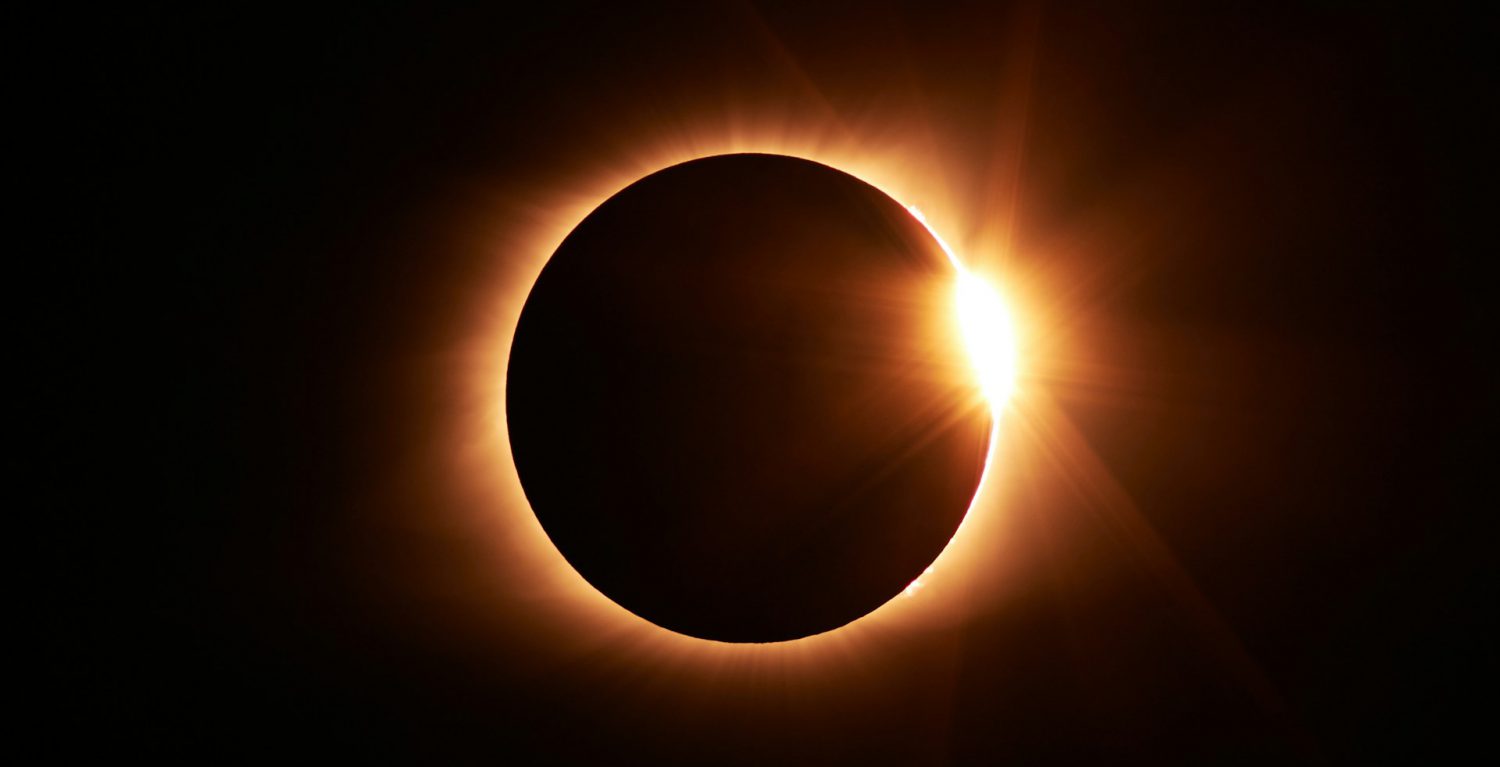
The total solar eclipse on Monday 2 August 2027 can be seen from the whole Costa del Sol, with totality starting at about 10:46. Totality lasts longer the further west you go: about 1 minute 48 seconds in Málaga city, 3 minutes 20 seconds in Marbella, 3 minutes 41 seconds in Estepona and almost 4 minutes in Manilva.
You’ve probably heard it called the eclipse of the century. For anyone staying on the coast that summer, the question is simple: where should you stand at 10:46 on a Monday morning in August, and how do you get your group there? A few kilometres along the coast make a difference of a minute or more, so the spot you choose matters. Some of the best spots are a short way out of the towns: hill villages and quieter beaches with longer totality, more space and a better view.
Key Takeaways
- Totality starts at about 10:46 on Monday 2 August 2027, and the partial eclipse runs from about 09:40 to just after 12:00.
- Totality gets longer the closer you are to Gibraltar, from about 3 min 20 s in Marbella to 3 min 52 s in Manilva.
- Málaga city is inside the path, but totality lasts only about 1 min 48 s there, so heading west along the coast doubles it.
- Tarifa and Gibraltar get Spain’s longest totality, at about 4½ minutes, and are expected to draw the largest crowds.
- The sun will be about 38° up in the east-southeast, so beaches facing the Mediterranean have a clear view.
- Hill villages such as Casares, Benahavís and Gaucín get over 3 minutes of totality, with open views and far fewer people than the town beaches.
How the 2027 eclipse crosses the Costa del Sol
The Moon’s shadow comes in from the Atlantic, crosses the Strait of Gibraltar and runs east along the coast. According to Spain’s National Geographic Institute (IGN), the path of totality covers almost all of Cádiz province, part of Málaga province, and Ceuta and Melilla.
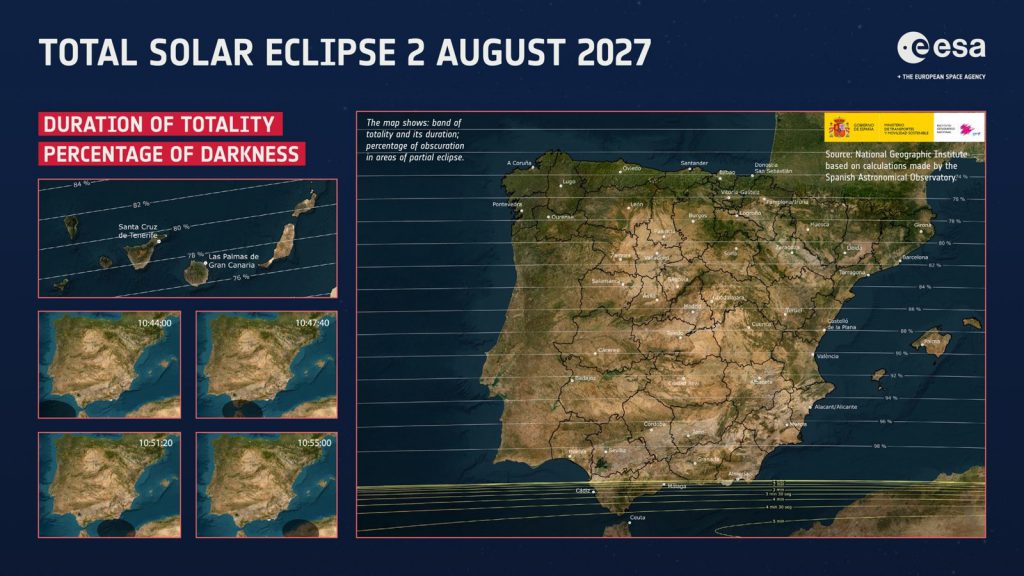
The closer you are to the Strait, the longer the darkness lasts. Ceuta gets 4 minutes 48 seconds, Cádiz about 2 minutes 54 seconds, and Málaga city 1 minute 48 seconds, starting at 10:48. In Marbella the partial eclipse begins at about 09:40, totality arrives at about 10:46, and the Moon clears the Sun just after 12:00.
Totality is the only part you can safely watch without glasses, and it’s the part people travel for. The sky goes dark, the temperature drops a few degrees, and the Sun’s corona appears around the black disc. For exact local times at any address, use the IGN eclipse page or the ESA map of totality in Spain.
Totality times town by town
Every town between Málaga and Manilva sees totality. The table shows how long it lasts at each one, west to east.
| Town | Totality | Starts | Drive from Málaga Airport |
|---|---|---|---|
| Manilva | 3 min 52 s | 10:46 | about 75 min |
| Estepona | 3 min 41 s | 10:46 | about 60 min |
| Casares | 3 min 35 s | 10:46 | about 70 min |
| San Pedro de Alcántara | 3 min 27 s | 10:46 | about 50 min |
| La Cala de Mijas | 3 min 25 s | 10:47 | about 30 min |
| Marbella | 3 min 20 s | 10:46 | about 45 min |
| Fuengirola | 3 min 15 s | 10:47 | about 25 min |
| Gaucín (inland) | 3 min 15 s | 10:46 | about 90 min |
| Málaga city | 1 min 48 s | 10:48 | about 15 min |
Totality figures as of October 2026, from IGN (Málaga) and published viewpoint data for the other towns. Times are CEST. Drive times are for a normal day, not eclipse morning.
Why it’s worth watching from out of town
At 10:46 the Sun will be about 38° up in the east-southeast, high enough to clear most rooftops. The reason to leave town is everything else that happens in those few minutes, and you see more of it from somewhere high and open.
- The shadow arriving. The Moon’s shadow comes in from the west, across the Strait. With a long view west over the sea or the hills, you may see the sky darken in the distance a few seconds before it reaches you.
- A glow all round the horizon. During totality the horizon turns orange and pink in every direction, like a sunset all the way round. Buildings, trees and hillsides close by hide it, so a wide, open view shows you the whole ring.
- Room for the group. Village viewpoints and quieter beaches leave space for chairs, cameras and everyone standing together, away from the crowds on the town promenades.
When you pick a spot, look for an open view to the east-southeast, where the Sun will be, and to the west, where the shadow comes from. A hill village gives you height and a view over the coast, and a quieter beach gives you a flat sea horizon.
There’s one trade-off. The centre of the path runs south of the coast, over the sea, so totality gets a little shorter as you go inland. Casares gets about 17 seconds less than Manilva, and Benahavís about 11 seconds less than San Pedro. For most groups, the view and the space are worth those seconds.
The best places to watch the eclipse, by area
The coast has three kinds of viewing spot: long beaches in the west, hilltop villages inland, and the Strait itself. Each suits a different kind of day.
Estepona, Manilva and Casares for the longest totality on the coast
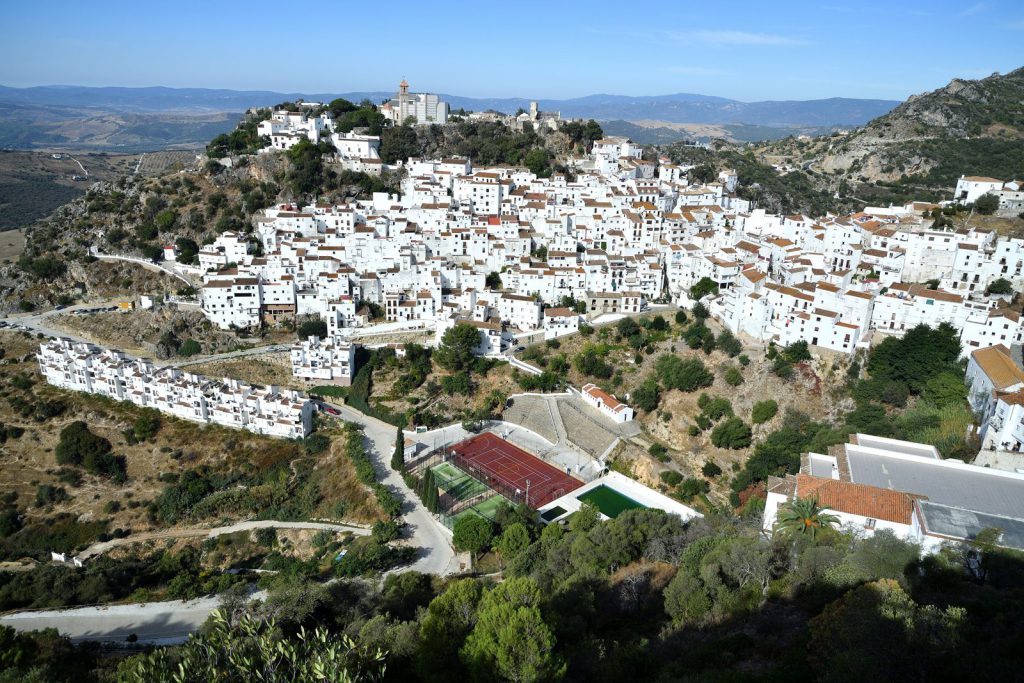
The western end of the Costa del Sol gets the longest totality you can reach without crossing into Cádiz province. Manilva gets 3 minutes 52 seconds and Estepona 3 minutes 41 seconds, around half a minute more than Marbella.
Playa de la Rada in Estepona is a long, open beach with a clear view east over the sea, and it’s the obvious place for a crowd to gather. Further west, the beaches around Puerto de la Duquesa in Manilva are smaller and usually quieter. Casares, a white village in the hills behind the coast, gets 3 minutes 35 seconds and a view over the whole coastline.
The drive from Málaga Airport to Estepona takes about 60 minutes on a normal day. After the eclipse there’s a full day left for lunch in the old town or an afternoon on the beach.
Marbella and San Pedro de Alcántara
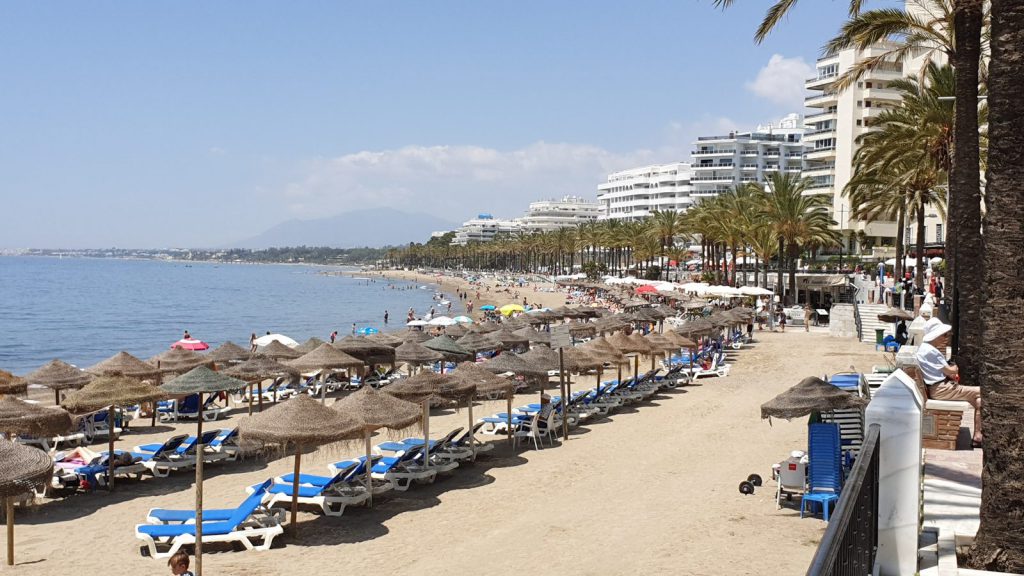
Marbella gets about 3 minutes 20 seconds of totality, and San Pedro de Alcántara, a few kilometres west, about 3 minutes 27 seconds. If you’re already staying in Marbella or Puerto Banús, you can watch from the Paseo Marítimo or any beach facing south-east.
This stretch has the most hotels and villas on the coast, so it will also have the most people watching. For more space, go up into the hills. Benahavís, a village about 15 minutes inland from San Pedro, gets 3 minutes 16 seconds of totality with a view down to the sea, and you’re back on the coast in time for lunch.
Mijas Costa and Fuengirola
La Cala de Mijas gets 3 minutes 25 seconds of totality, more than central Marbella, and it’s only about 30 minutes from the airport. Fuengirola gets 3 minutes 15 seconds.
This is the best choice if you’re staying in Málaga, Torremolinos or Benalmádena and don’t want a long drive. You get almost twice the totality of Málaga city for a half-hour journey.
Gaucín and the Serranía de Ronda
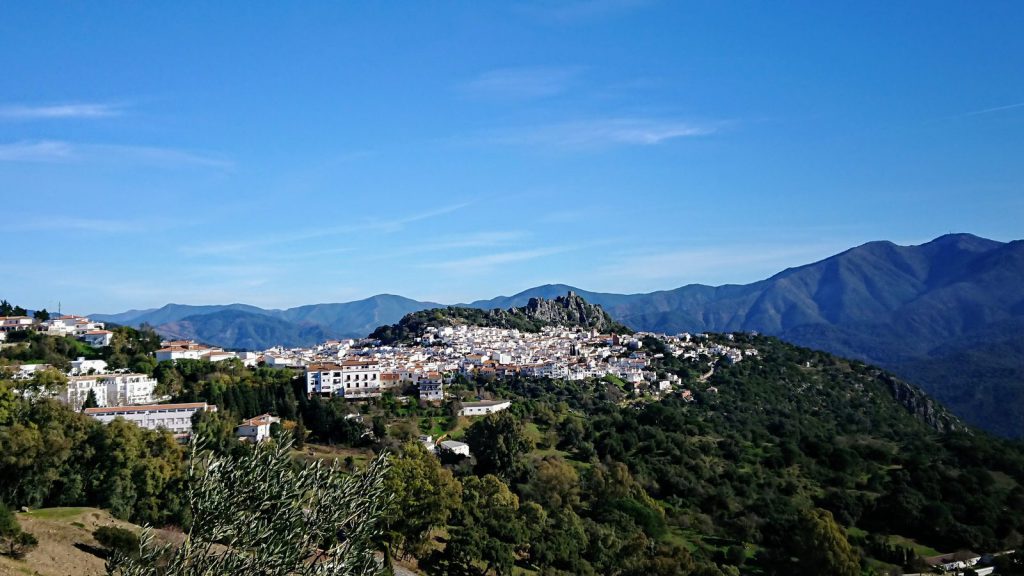
For mountain views and fewer people, head inland. Gaucín’s Balcón de la Serranía viewpoint gets 3 minutes 17 seconds of totality, looking out over the Genal valley towards the coast.
The drive up from the coast takes about 90 minutes from the airport, so plan an early start. The reward is a full day in the white villages, with lunch in Gaucín and the slow road back through the hills.
Tarifa and Gibraltar for the longest totality in Spain
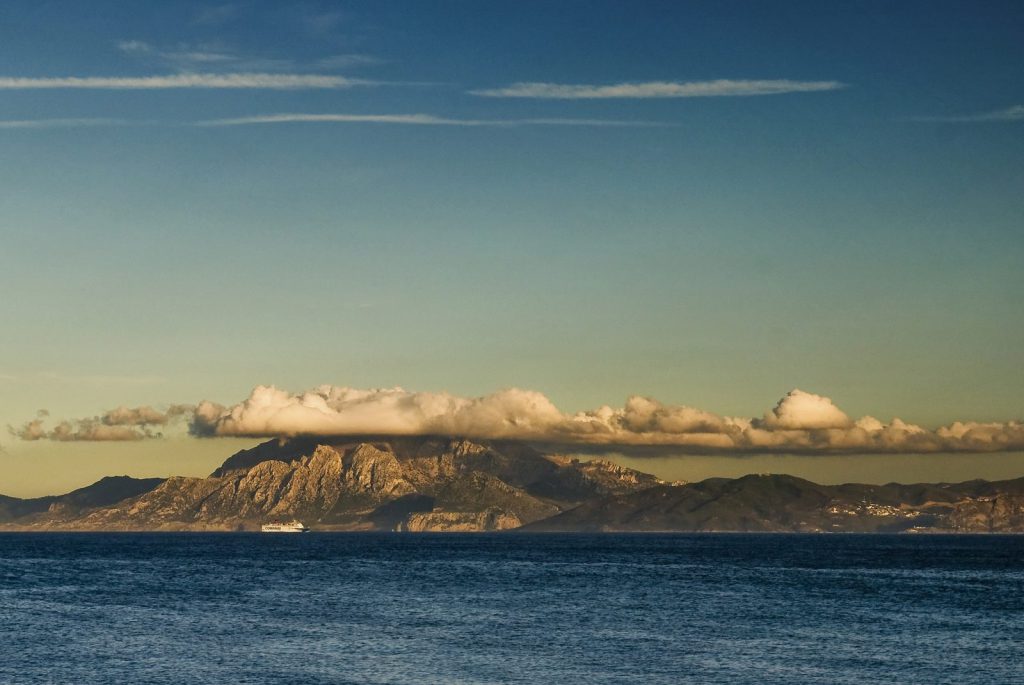
Tarifa and Gibraltar sit almost on the centre of the path and get about 4½ minutes of totality, the longest you’ll find in mainland Spain or on the Rock. In Tarifa, the Valdevaqueros dunes and the Roman ruins of Baelo Claudia have open views across the Strait to Morocco. In Gibraltar, Europa Point at the southern tip is the natural spot.
HM Government of Gibraltar has already started planning for thousands of extra visitors, including traffic and transport. If you go to Gibraltar, bring passports for the border. Either destination is a full day out: Tarifa is about two hours from Málaga Airport.
Comparing the viewing spots
| Area | Totality | From Málaga Airport | Best for |
|---|---|---|---|
| Tarifa / Gibraltar | about 4½ min | about 90–120 min | The longest totality, a full day out |
| Manilva / Estepona | 3 min 41 s to 3 min 52 s | about 60–75 min | The longest totality on the Costa del Sol |
| Marbella / San Pedro | 3 min 20 s to 3 min 27 s | about 45–50 min | Staying near your hotel or villa |
| La Cala de Mijas / Fuengirola | 3 min 15 s to 3 min 25 s | about 25–30 min | A short trip from Málaga |
| Benahavís / Casares | 3 min 16 s to 3 min 35 s | about 60–70 min | Hill villages, open views, more space |
| Gaucín | 3 min 17 s | about 90 min | Mountain views, fewer people |
| Málaga city | 1 min 48 s | about 15 min | Staying put |
Can you see the total eclipse from Málaga city?
Yes, but only just. According to the IGN, Málaga city gets 1 minute 48 seconds of totality, starting at 10:48. The city sits near the eastern edge of the path, and some guides list it as partial only, so don’t be surprised if you read conflicting figures.
Driving 25 minutes west to Fuengirola or La Cala de Mijas almost doubles your time in the dark. As we’re based by Málaga Airport in Churriana, an early pick-up from anywhere in Málaga, Torremolinos or Benalmádena is a short run for our drivers.
Getting there and back on eclipse day
The eclipse falls on a Monday in peak August, the busiest month of the year on the coast. Many visitors will be heading west on the A-7 and the AP-7 toll road on the same morning, and car parks near popular beaches and viewpoints are likely to fill early.
The quieter viewing spots, such as Casares, Benahavís and Gaucín, are also the hardest to reach without your own transport, and their village car parks are small. A private driver takes the parking out of the plan. Your driver collects you at your hotel or villa, drops you at the viewing spot, waits through the eclipse, and takes you on to lunch or back home. With vehicles for 6 to 39 passengers, from a Mercedes E-Class to the 39-seat Executive bus, one vehicle can carry a family or a whole company group.
| Booking option | Return transfer | Full-day hire |
|---|---|---|
| How it works | Drop-off before the eclipse, pick-up at an agreed time | Driver and vehicle stay with you all day |
| Good for | One viewing spot, then home | Eclipse plus lunch, a beach or a village |
| Changing plans | Agree the pick-up time in advance | Move location on the day if the weather changes |
| Price | Quoted per journey | Quoted for the day |
Three eclipse days out that work well
- Estepona beach morning. Watch from Playa de la Rada, then lunch in the old town and an afternoon on the beach.
- Gaucín and the white villages. Watch from the Balcón de la Serranía, then lunch in the village and a drive back through the Genal valley.
- Tarifa and Baelo Claudia. Watch from the dunes, then the Roman ruins and a late lunch by the sea.
Tell us your date, pick-up address and group size, and we’ll send an all-inclusive quote. Request a quote or call +34 951 279 117. Quotes include VAT, motorway tolls and child seats.
Practical tips for eclipse day
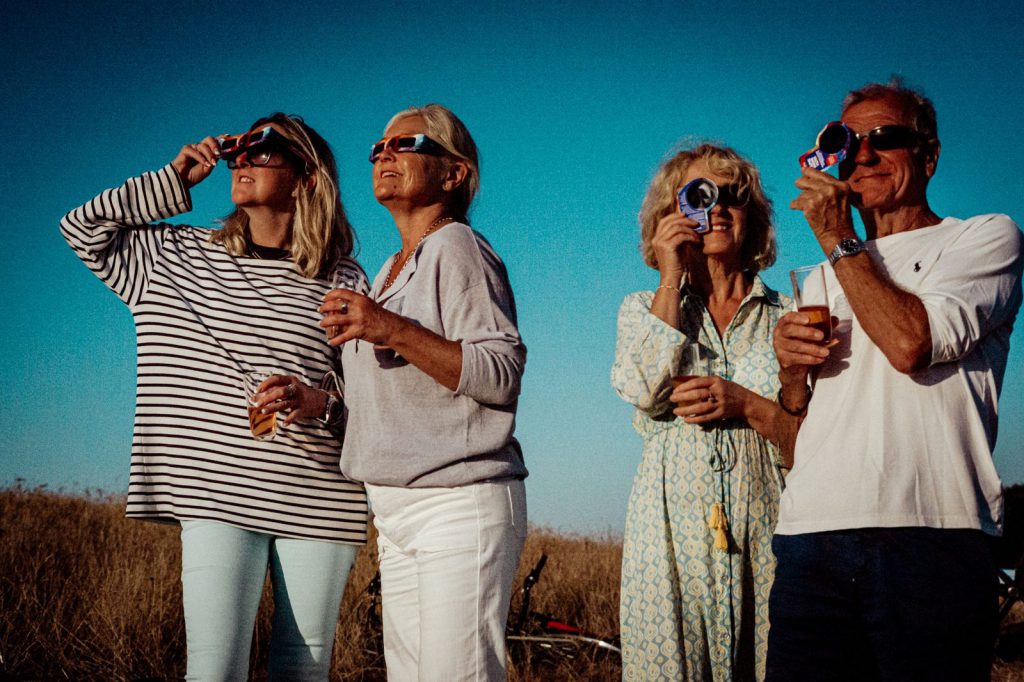
- Eye protection. Use eclipse glasses certified to ISO 12312-2 for the partial phases. You can take them off only during totality, and they go back on as soon as the first bright point of the Sun returns.
- Phones and cameras. Put a solar filter over the lens during the partial phases. During totality you can shoot without one.
- Weather. August mornings on the Costa del Sol are usually clear. The levante, the strong easterly wind, can bring low cloud around Gibraltar and the Strait, so check the AEMET forecast the day before. With a driver, you can switch to another spot that morning.
- Water and shade. By 10:00 in August it’s already warm, so bring water, hats and sun cream for the wait.
- Accommodation. Book early. Hotels along the path are expected to be in high demand for the eclipse weekend.
Plan your eclipse day now
The 2027 eclipse is one morning only, and the length of totality depends on where you stand. Anywhere from Fuengirola west gives you more than three minutes, and the western end of the coast gives you almost four. Step a little out of the towns, to a hill village or a quieter beach, and you get the same sky with more room to enjoy it. Choose your spot, then plan how your group gets there and back.
Book your eclipse-day transfer or full-day hire early. Get a quote or call +34 951 279 117, and we’ll plan the day around your group.
Frequently Asked Questions
When is the 2027 eclipse in Spain?
The total solar eclipse is on Monday 2 August 2027. On the Costa del Sol the partial phase starts at about 09:40, totality begins at about 10:46, and the eclipse ends just after 12:00.
What time is the eclipse in Marbella?
Totality in Marbella starts at about 10:46 and lasts about 3 minutes 20 seconds. The partial eclipse begins at about 09:40 and ends just after 12:00.
Is Málaga in the path of totality?
Yes. Málaga city gets about 1 minute 48 seconds of totality from 10:48, according to the IGN. Towns further west, such as Fuengirola and Marbella, get more than three minutes.
Where is the best place to see the 2027 eclipse in Spain?
Tarifa, Gibraltar and Ceuta get the longest totality in Spain, at about 4½ to 4¾ minutes. On the Costa del Sol, Manilva and Estepona get the most, at almost 4 minutes.
How do I get from Málaga Airport to the eclipse path?
Málaga Airport sits near the edge of the path, so a 25-minute drive west to Fuengirola puts you well inside it. Estepona is about 60 minutes away and Tarifa about two hours. A private transfer or full-day hire with a driver can be booked in advance.
Is it better to watch the eclipse from the hills or the beach?
Either works if you have an open view to the east-southeast, where the Sun will be. Hill villages such as Casares, Benahavís and Gaucín give you height, space and a wide horizon, for a few seconds less totality than the coast below. Quieter beaches give you a flat sea horizon, and the town promenades have the most people.
Do I need special glasses to watch the eclipse?
Yes, for the partial phases. Use glasses certified to ISO 12312-2 and take them off only during the minutes of totality.
Photo credits
- Map of totality in Spain: ESA, CC BY-SA 3.0 IGO
- Casares: ZC.Marbella, CC BY-SA 4.0
- Playa de la Fontanilla, Marbella: Cabeza2000, CC BY-SA 4.0
- Gaucín: Heparina1985, CC BY-SA 4.0
- Morocco from Tarifa: Łukasz Ciesielski (Guma89), CC BY-SA 4.0
- Eclipse glasses: Aleks Marinkovic, Pexels License


